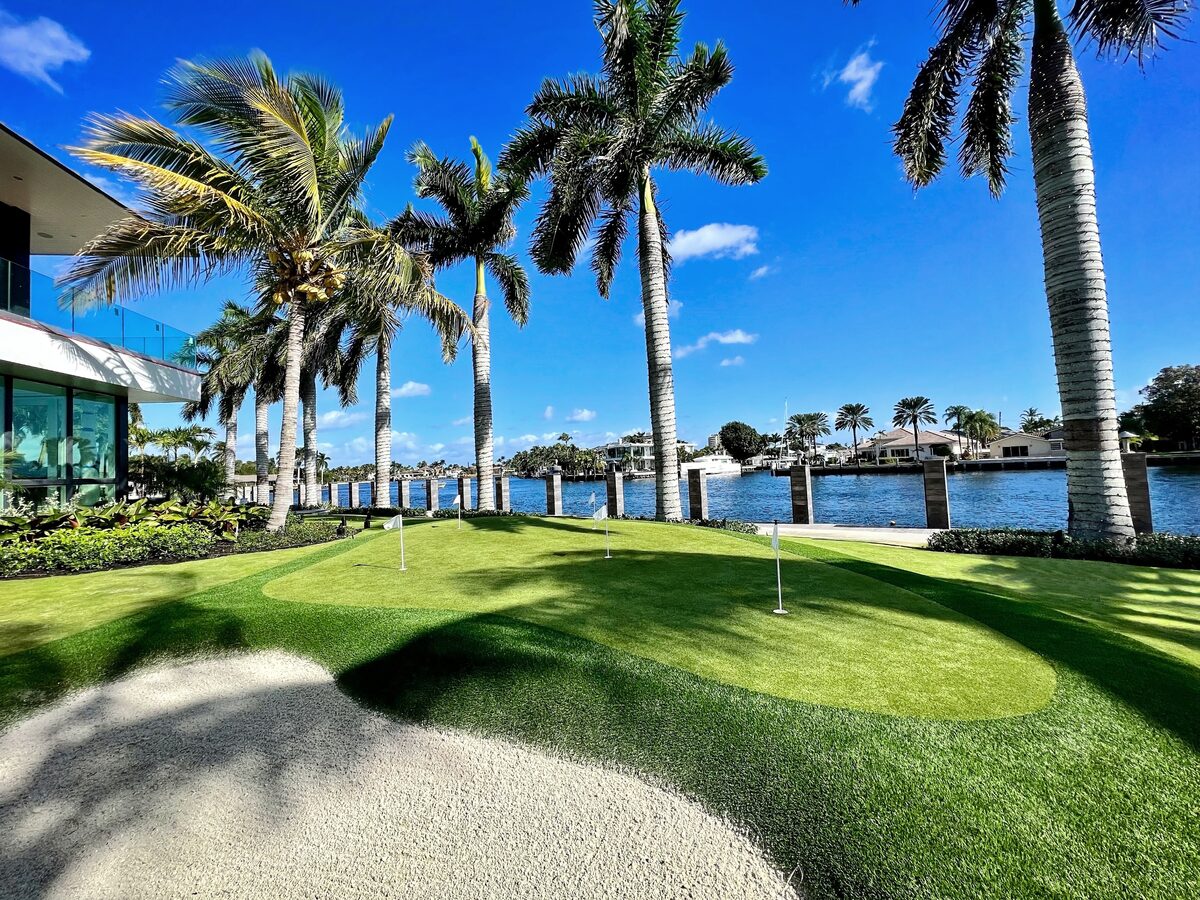
A specialty preventative-oversight program for waterfront, canal-front, oceanfront, coastal-exposed, and seasonal homes in Lighthouse Point, Boca Raton, Delray Beach, Gulf Stream, Highland Beach, and Hillsboro Beach. Salt-air observations, corrosion-prevention checks, hardware lubrication, and the small details that go unnoticed until they cost real money. This is property oversight and preventative ownership — not traditional property management.
Where this fits
Every level is one team and one point of contact. Start where your property is today; move up when you want more handled.
Coastal properties get worked over by a set of specific forces most South Florida landscape crews rarely encounter. Each one has its own signature, and each one has to be accounted for.
Exterior bolts, hinges, fittings, and low-voltage landscape lighting fixtures corrode from the inside first. By the time it’s visible on the surface, the internals are already compromised.
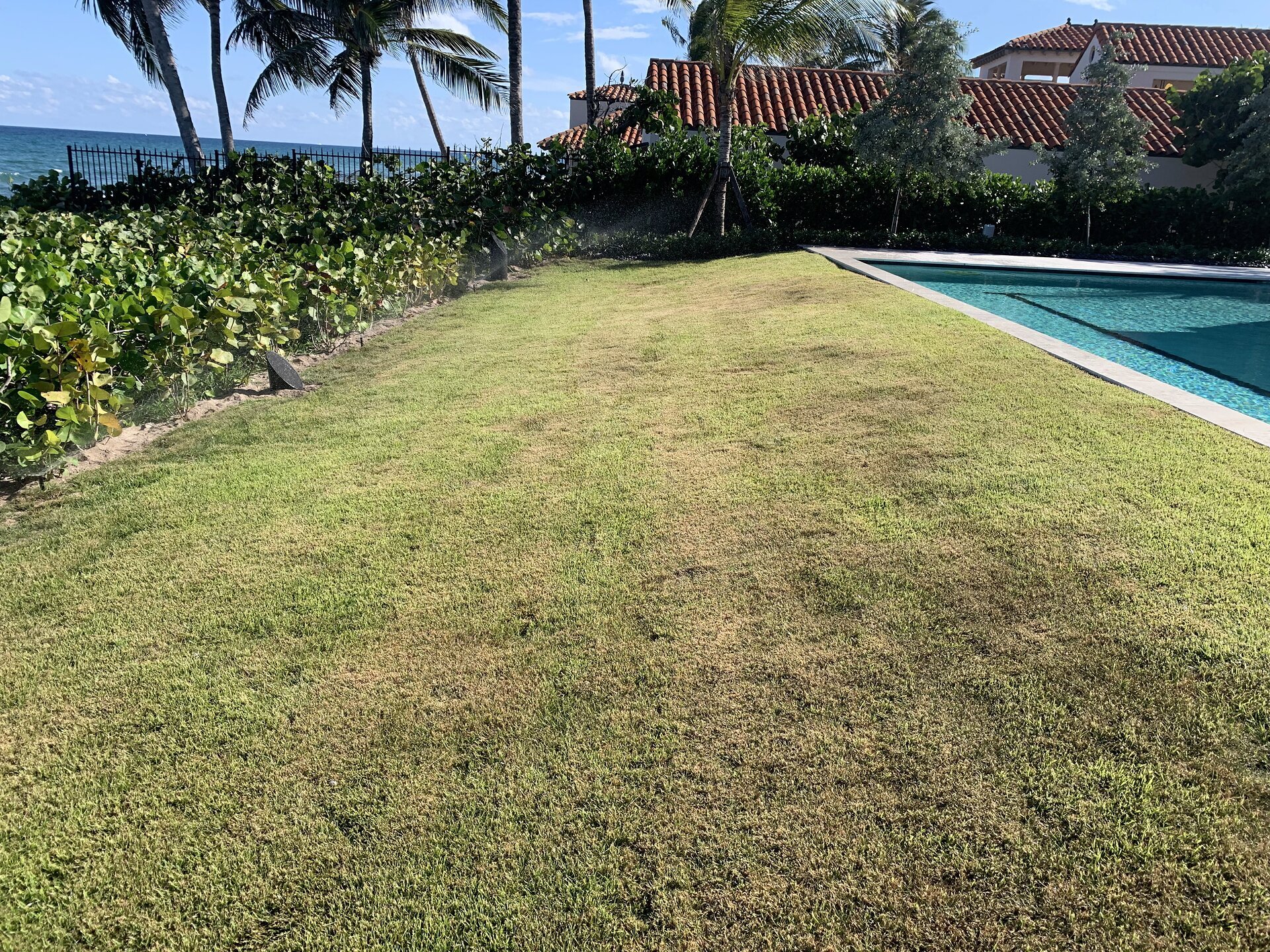
Direct salt-spray on foliage burns the top half of most grass species and non-salt-tolerant ornamentals. Only the specifically-salt-tolerant varieties — Paspalum, salt-tolerant Zoysia, sea grape, saw palmetto, silver buttonwood — handle it long-term without breaking down.
Coastal sand drains too fast for unestablished sod, which is where many new installs fail early. But with the right grass selection, the right prep, and the seasonal adjustments through the year, coastal soil performs well long-term. It’s not the problem — the practices being matched to the profile is.
Wind-driven sand and grit during storms doesn’t just wear on the landscape. It scours the paint on the home, windowsills, shutters, window frames, gutters, and fascia. On oceanfront and near-beach properties, the whole exterior is under grit-blast conditions when the wind is up.
Every unpruned palm, every dead limb, every loose coconut becomes a potential projectile when storms move through. May palm work and pre-storm walk-throughs eliminate most of that risk before it becomes damage.
Sensitive plants absorb salinity through the root zone and decline slowly. It looks like generic plant failure until you check the soil profile and see what’s actually driving it.
Twice-monthly king tides push saltwater onto low-lying landscape beds and the front swale, depending on your area’s flood history. The impact accumulates over months if it isn’t flushed and monitored.
Many property and landscape problems are small for a long time before they become frustrating or expensive. Our job is to catch them while they're still small. Coastal Smart Property Care is built around weekly observation of the things most homeowners never think to look at — and most landscape companies never look at either.
Property oversight and preventative ownership observations included:
A note on how we work: Florida Boys isn't simply a company with a vendor list. Through long-standing relationships with trusted growers, suppliers, contractors, tradespeople, and specialty service providers, we help homeowners identify issues, understand options, coordinate solutions, connect with the right professionals, verify work when appropriate, and improve communication and follow-through across every aspect of the property. Relationships matter — and so do accountability and verification.
Coastal Smart Property Care is built for the neighborhoods we know well — the ones where salt air, king tides, and storm exposure dictate how a property has to be cared for. The named communities below are where we already have the deepest experience, but if you live anywhere on this coast with the same conditions, the program fits.
Most companies install Floratam everywhere. We pick Paspalum or salt-tolerant Zoysia for direct ocean exposure. The lawn lives.
Salt exposure hits oceanfront and coastal properties harder than most homeowners realize — especially on the east-facing side of the home, which takes the direct brunt of the salt air blowing off the water. Powder-coated aluminum and cheaper aluminum landscape lighting fixtures can start corroding within a year in that environment. The finish pits, the housing weakens, and the whole fixture fails long before it should.
High-grade copper and marine-grade brass fixtures hold up dramatically longer, which changes the replacement interval from annual to decade-plus. That’s the primary difference between fixtures that survive coastal exposure and fixtures that don’t.
The second half of the equation — and the piece most companies overlook — is the connections. Salt air and moisture creep into weak or exposed connectors and slowly corrode them. Even a well-built fixture will fail early if the connection isn’t sealed and rated for coastal exposure.
On some properties, composite fixtures are worth considering as an alternative. They look like metal, they don’t fade, pit, or rust, and they hold their finish for 8 to 10+ years — a strong option for owners who want the coastal-appropriate look with the longest replacement interval on the market.
By June 1, every palm on your property has been trimmed, every coconut cleared, every loose item identified. When a storm gets named, you're already 90% ready.
Most companies don't know king tides exist. We track the lunar cycle and flush salt-affected beds before the buildup kills the plantings.
Jorden walks every Coastal Smart Property Care property personally during onboarding and stays the direct contact. Call or text (561) 886-7982 — you reach him, not a dispatcher.
Coastal properties don’t experience one climate — they experience four. The east side of an oceanfront home faces the direct salt air, wind, and daily marine spray. The west side is protected from that but often takes the harshest afternoon sun. The north and south sides deal with wind funneling, privacy exposure, and neighboring property interaction. Each side develops its own microclimate, and each one needs a different landscape approach if the property is going to age well over the next 5-10 years.
Salt air blows in constantly, moisture sits on foliage overnight, and wind gusts scour anything that isn’t built for it. Plant selection here shifts to the hardiest salt-tolerant varieties — sea grape, saw palmetto, silver buttonwood — and plant spacing has to allow for airflow so the canopy doesn’t trap moisture and mildew. Watering shifts too. On east-facing plantings, we run shorter cycles more often and periodically flush the soil with fresh water to break down accumulated salt in the root zone before it becomes toxic.
The west side of a coastal home is a different problem entirely. Less salt exposure, but more sun stress. Plant material can shift toward broader-leaf tropicals — bougainvillea, plumeria, crotons, tropical color plantings — that would burn on the east side. Watering programs need to compensate for the afternoon heat load, and mulch depth matters more here to retain soil moisture.
The north and south sides usually carry the property’s privacy screening — Clusia, Podocarpus, hedges, layered plantings between the home and neighboring properties. Wind funnels down these corridors differently on each side, and privacy hedges have to be selected and layered to handle both the wind pattern and the sight lines. What works on the north side of an Ocean Ridge home won’t necessarily work on the south side of a Manalapan estate — the wind, sun angle, and neighboring topography all change.
Every coastal community we serve — from Pompano Beach and Hillsboro Beach to Deerfield Beach, Boca Raton, Highland Beach, Delray Beach, Gulf Stream, Ocean Ridge, and Manalapan — has its own coastal profile. Wind patterns differ. Beach setback differs. Elevation differs. What survives on a Deerfield Beach oceanfront property is different from what survives at the north end of Ocean Ridge or on the wind-exposed Manalapan barrier island.
The final consideration is one most homeowners never think about until it’s too late. Air conditioning units and standby generators on oceanfront and coastal properties take a beating from wind, salt spray, and airborne debris — the same forces that punish the landscape. Proper plant material selection around HVAC pads and generator enclosures acts as a natural windbreak and salt filter, reducing the corrosion load on the equipment itself. Which plants work depends entirely on the property. No two estates share the same wind pattern, salt exposure, or equipment placement, so plant selection for that role is custom every time. Done right, the right screening around HVAC and generators can meaningfully extend equipment life on a property that would otherwise chew through both.
There’s a real difference between oceanfront, near-beach coastal, and intracoastal properties — and it shows in everything the property needs. Oceanfront homes take the harshest salt, wind, and moisture load in South Florida. Coastal homes a few blocks off the beach see meaningful salt exposure with more forgiveness. Intracoastal homes have their own patterns — brackish moisture, humidity pockets, less direct wind — but rarely the full oceanfront salt load. Treating them the same is where properties get quietly damaged over the years.
Oceanfront and coastal conditions don’t stop at the plant beds. Door hinges corrode faster. Paint fails sooner. Shutters and outdoor hardware need earlier attention. Pool equipment runs harder against salt and humidity. Watering cycles look different than inland. Plant selections have to hold up in conditions most South Florida landscape crews never see day-to-day. The same expertise that protects the landscape protects the equipment, the finishes, and the property itself — because on the coast, every system is fighting the same environment.
The coastal ecosystem doesn’t stand still through the year. Hot dry summer conditions call for different watering cycles, mulch depth, and heat-stress monitoring. The rainy season shifts the equation entirely — drainage becomes the priority, fertilization schedules change, and irrigation runtimes have to be scaled back to avoid oversaturation. Winter brings the cold, consistent pounding of the northeast winds — the pattern that dries out foliage, drives salt further inland, and stresses everything on the east and north sides. Every one of these seasonal shifts changes what the property needs, and the schedule has to adjust for it — sometimes week to week — to keep the landscape and the property performing through the year.
That’s why every coastal property gets a bespoke plan built from a walk of the property — not a template applied from a truck. Oceanfront and coastal work has a steep learning curve, and it’s a hard place to be figuring things out on someone else’s property. Our approach is built on decades of specifically-oceanfront experience across these communities — and it’s the level of thought that separates coastal property care from generic landscape service.
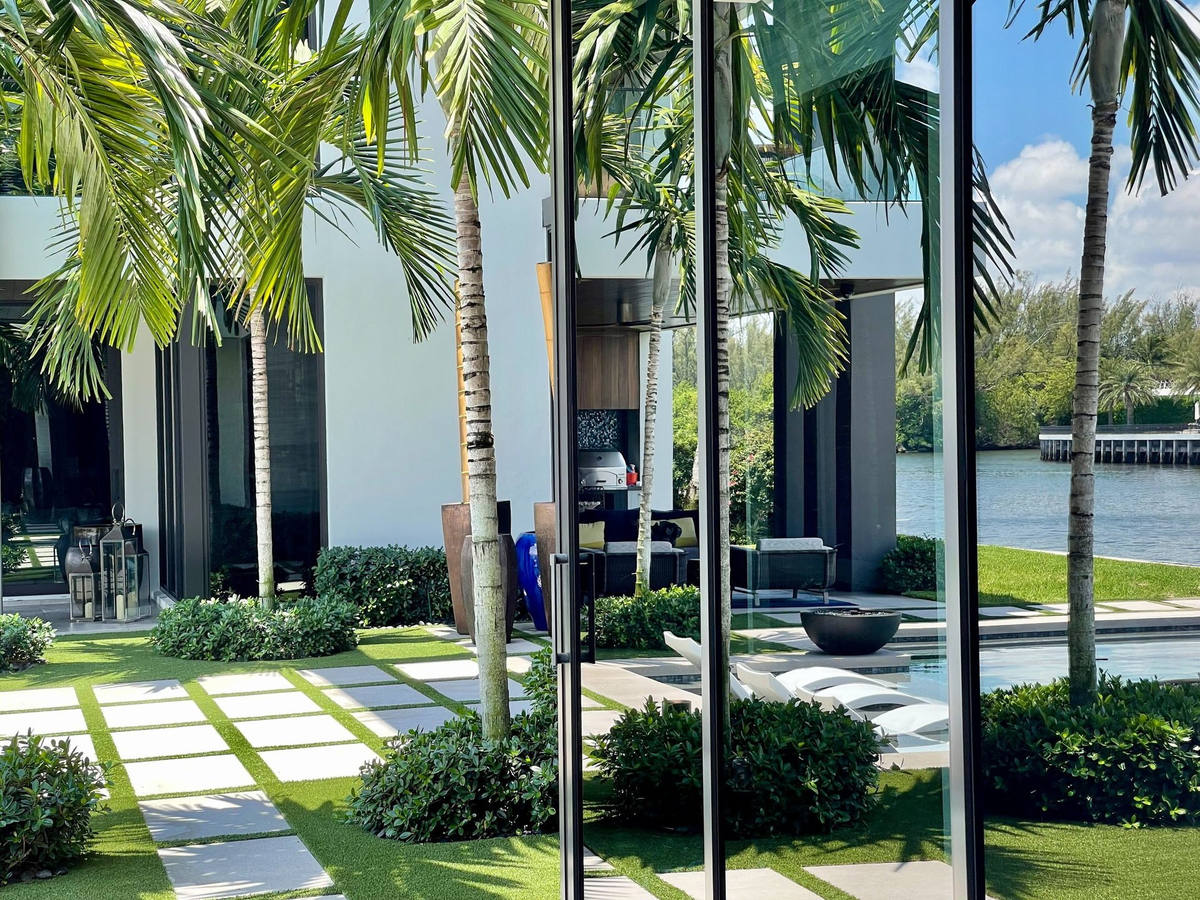
We start every Coastal Smart Property Care relationship the same way. Jorden meets you on the property, walks it together, and reads the coastal conditions specific to your microclimate — salt exposure, drainage, irrigation, soil, plant material, hardware corrosion, hurricane vulnerability. Then we put together a clear plan with what's worth handling, what's not, and which tier of program makes sense for your situation.
No high-pressure sale. No cookie-cutter package. Just an honest assessment from the owner-operator team that has been caring for coastal South Florida properties since 2009.
Coastal Smart Property Care service area — Boca Raton · Lighthouse Point · Gulf Stream · Highland Beach · Hillsboro Beach · Delray Beach waterfront · Pompano Beach waterfront