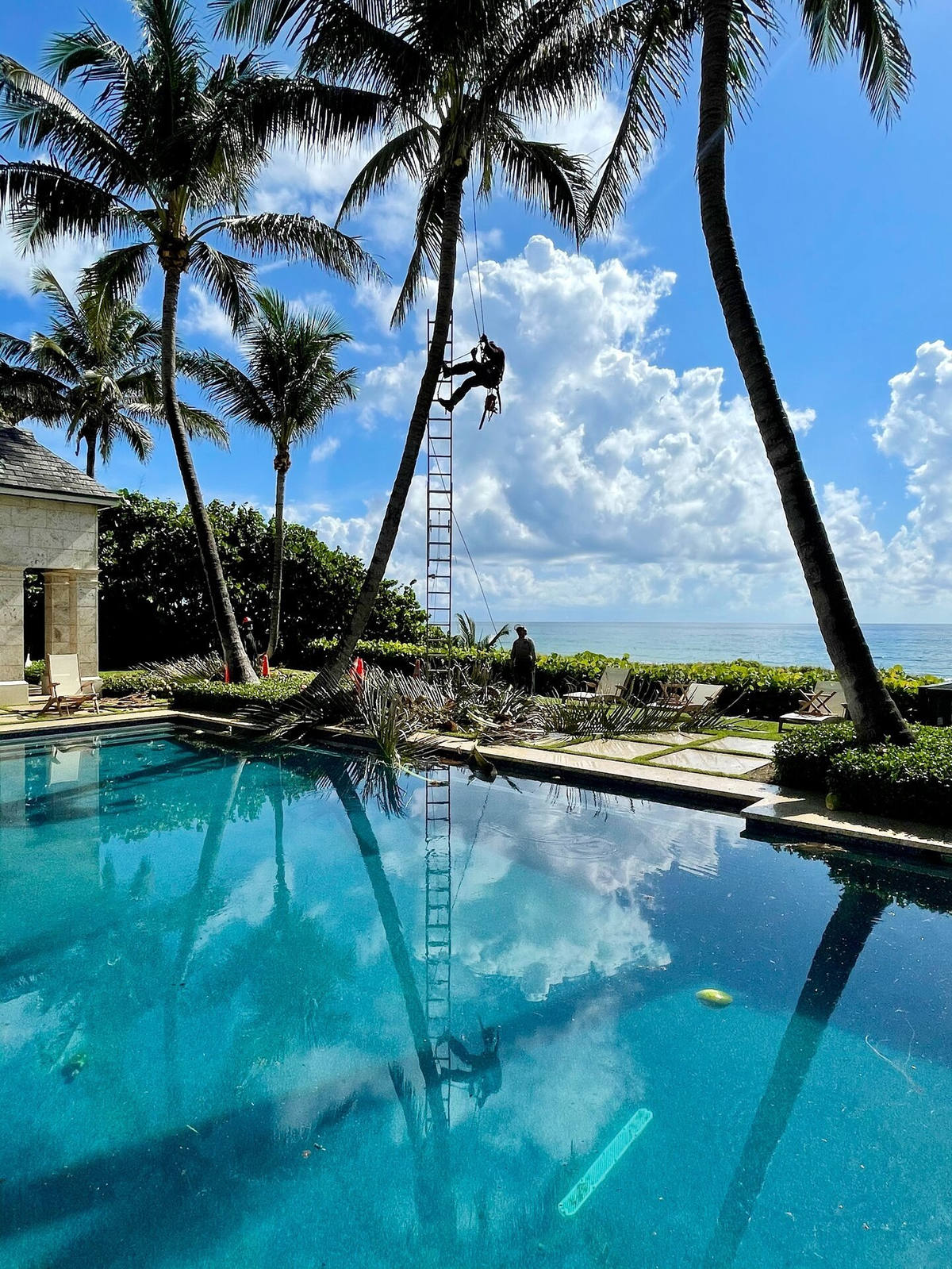
The Atlantic hurricane season runs June 1 through November 30. By the time the first named storm shows up in a forecast cone, the work that actually protects a South Florida property is already done — or it isn’t. There is no last-minute version of hurricane prep that works on the landscape. Tree crews are booked solid the week a storm forms. Palm pricing doubles. Irrigation parts go out of stock. Everyone wants the same thing at the same time.
Mid-May through early June is the right window. The grass is in growth mode, palms are pushing new fronds, and crews still have open days on the calendar. This is the post we send clients every year asking what should I be doing before storm season, organized in the order we actually walk a property. None of it is hype. All of it is from doing this work along the Boca, Delray, Highland Beach, Gulf Stream, Pompano, Lighthouse Point, and Deerfield coastline for years.
The week a named storm forms is not when you do hurricane prep. By then, every tree crew in the county is double-booked and every fronds-in-a-storm clip on the news is showing what someone else didn’t do six weeks ago.
Palm Trimming: Timing and the Hurricane-Cut Trap
Palms are the single biggest variable in residential hurricane prep along the coast. A well-trimmed palm rides a storm out cleanly. A neglected one sheds fronds, seed pods, and sometimes whole boots onto cars, screens, and roofs. The fix is straightforward, but the timing and method both matter.
The right window to trim is roughly six weeks before peak storm probability — mid-May through early June for most coastal South Florida. Trim too early in the spring and you risk pulling green fronds the palm still needs for energy. Trim too late and you’re paying surge pricing and waiting in line behind every other property in the neighborhood.
What a Real Pre-Storm Palm Trim Looks Like
A correct hurricane-season palm trim does three things, in this order: remove dead and yellowing fronds, remove all seed pods and flower stalks, and selectively reduce the lowest tier of healthy fronds if the canopy is dense. The bar is the 9-to-3 cut — nothing trimmed above the imaginary horizontal line that runs across the trunk at the nine and three o’clock position. Fronds above the horizontal stay. Fronds below come off.
Seed pods deserve their own line item. A mature coconut palm or queen palm can carry forty to sixty pounds of pods. In a tropical storm that’s a forty-pound projectile attached to a flexible whip. Removing pods is not a cosmetic call — it’s the single most cost-effective hurricane prep move on most properties. We see roof and screen-enclosure damage caused by seed pods every season.
The Hurricane Cut That Kills Palms Slowly
Every year we get calls from owners asking for a hurricane cut, which in practice means stripping the palm down to a feather-duster crown of three or four fronds pointing straight up. This is the worst trim you can give a palm. It pulls the green tissue the palm uses for photosynthesis, weakens trunk strength, invites disease through the wounds, and on coconut palms it accelerates decline that may not show up for two or three years.
A palm trimmed to a hurricane cut is also less wind-resistant, not more. Fronds dissipate wind energy. Strip them and the wind hits the trunk and crown directly. The pictures of palms riding out a Cat 4 with bent fronds and an intact crown are not pictures of hurricane-cut palms — they’re pictures of properly trimmed ones. We don’t do hurricane cuts. If you want a crew that will, that’s a different company, and your palms will pay for it over the next few years.
For a deeper look at how we approach palm work specifically, the palm trimming service page walks through method, timing, and what we charge per palm. City-specific notes for Boca Raton, Delray Beach, Pompano Beach, and Deerfield Beach live on their own pages.
Large Trees: Crown Thinning, Not Topping
Beyond palms, the trees that cause the most storm damage on residential properties are mature ficus, gumbo limbo, mahogany, oak, and unmaintained black olive. The failure mode is almost always the same: a top-heavy canopy catches wind like a sail, the trunk torques, and a major limb tears out or the whole tree fails at the root flare.
Proper pre-storm tree work is selective crown thinning and end-weight reduction — not topping. A good arborist removes interior deadwood, opens windows in the canopy so wind passes through instead of pushing against it, and reduces the length of limbs that lever the most weight against the trunk. Topping a tree creates the same problem palms get from hurricane cuts: weaker regrowth, decay entry points, and a tree that is structurally worse in the next storm than it was in this one.
For anything over about twenty-five feet, or anything near a roof, pool cage, or power line, this is a certified arborist conversation and a separate insured crew — not the landscape crew. We coordinate it as part of an estate management or property management agreement, but the actual cutting goes to specialists.
Irrigation: Shut It Down Smart
An irrigation system is one of the things people forget about until the storm has already passed and they realize the controller has been running through three days of rain. There are three irrigation moves worth making before a storm and one worth making for the season as a whole.
Pre-season, the move is a full system audit — walk every zone, check head alignment, replace broken risers, look for soggy spots that signal an underground leak, and check that backflow preventers are still secured and shaded. Coastal salt and UV do quiet damage to PVC and to controller housings. Catch it in May, not in August. The full breakdown of what a proper audit looks like lives on the irrigation page.
When a storm enters the forecast cone within seventy-two hours, three quick moves cover most properties:
- Set the controller to rain off or pull the rain-sensor wire. A storm does not need a sprinkler system topping it off.
- Check that any above-ground valve box lids are seated and bolted. Wind-driven debris will pry off a loose lid in fifteen seconds.
- Confirm the main shutoff at the meter is accessible and the well pump breaker is labeled. If a main line ruptures from a falling limb after the storm, you want to be able to kill water in under a minute.
If you have a well-fed system, also unplug the pump at the breaker before the storm arrives. Lightning strikes and surge events are the most common cause of irrigation pump failures in South Florida, and the simplest prevention is a flipped breaker. Replacement pumps run twelve hundred to twenty-five hundred installed. The breaker flip is free.
Mulch, Rock, and Anything Loose Enough to Throw
Mulch in a hurricane is shrapnel. We have pulled three-inch chunks of cypress mulch out of vinyl siding and aluminum screen frames after named storms. The right move is not to remove all the mulch — it still has a job to do for moisture and weed suppression — but to make sure beds are properly edged, mulch depth is not piled six inches high against a wall, and any decorative rock near the house is contained, not loose surface scatter.
The same logic applies to everything else on the property that isn’t bolted down. Walk the yard the week before a storm threatens and ask: if a sixty-mile-per-hour gust caught this, where would it end up?
- Planters — move heavy ceramic and terra cotta inside or into a corner against a wall
- Garden art, hose reels, wind chimes — inside the garage
- Pool toys, floats, deck chairs — inside or weighed down with sandbags
- Trash cans and recycling bins — secured, not just rolled into a corner
- Patio umbrellas — closed and lowered, or removed entirely if old
- Loose hardscape — stepping stones not set in mortar, plant trellises that aren’t anchored
This is the part of hurricane prep most owners can do themselves. Crew time is more valuable on palms, trees, and irrigation; an hour of your own time walking the property catches everything in this category.
Pool Cages, Screen Enclosures, and Hedge Clearance
One of the most expensive single line items after a storm is a screen-enclosure rebuild on a pool cage. They run anywhere from twelve thousand to forty thousand on a residential property. Two landscape factors drive most of the damage: a palm or tree close enough to the cage to whip a frond through it, and an overgrown hedge pressing against the screen from the outside.
Six weeks out from a storm, walk the perimeter of every pool cage and screen enclosure. Any frond, branch, or hedge surface that touches the screen now will be a tear point in a storm. Trim it back. The same goes for hedges pressed against window screens, garage screens, and AC condenser cages.
After the Storm: The First 72 Hours
Once the storm has passed, what you do in the first three days drives recovery cost on the landscape side. The triage looks like this:
Day one is a safety walk. Look for downed limbs leaning against the house, fence sections leaning into the yard, broken irrigation main lines (you’ll see a wet spot or hear water running), and any palm or tree that has lifted at the root flare. Don’t cut anything yet — just document with photos and note priorities.
Day two is debris triage. Pile woody debris separate from leafy debris separate from man-made debris — most counties pick up storm debris on a separate schedule and won’t take mixed piles. Get debris off the lawn quickly; even forty-eight hours of fronds and limbs on top of paspalum or zoysia in summer heat will yellow the turf underneath.
Day three is the saltwater question. If the property took saltwater spray or a coastal surge, the irrigation system needs to be flushed and the lawn needs to be deeply watered with fresh water to push salt below the root zone. Salt sitting on a coastal lawn for a week kills it faster than the storm did. Run irrigation longer than normal for three to five cycles, and on coastal properties, consider a gypsum application to displace salt in the soil.
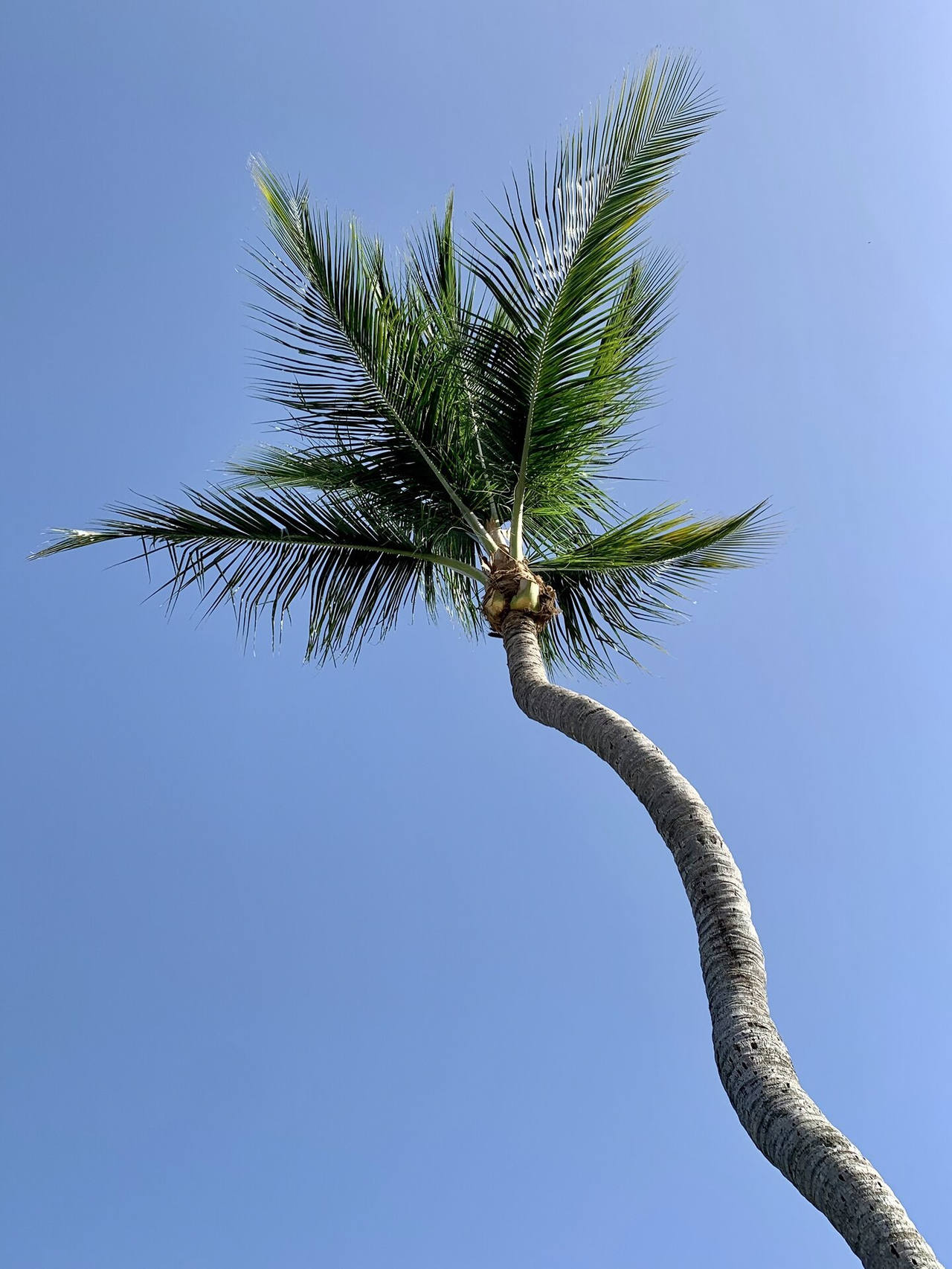
Properly trimmed before storm season: dead fronds out, seed pods off, healthy canopy left intact.
No hurricane cut, no stripped trunk, no slow decline.
Replanting and Repair Timing
The instinct after a storm is to fix everything immediately. The landscape doesn’t work that way. Palms that survived but look ragged often re-foliate within sixty days — don’t remove a palm before you know whether it’s coming back. Hedges that look broken can be reshaped instead of replaced. Lawns that look fried from saltwater often recover with two weeks of deep fresh-water cycles.
The right time to replant is once the active storm threat is past and there’s a good window of warm rainy weather for establishment. In South Florida that’s usually mid-September through October if it’s a quiet season, or as late as November if the season was active. Spending replacement money in July on a palm or hedge that would have recovered on its own is the most common post-storm mistake we see.
What Should Be Booked Now
If you’re reading this in May and the property hasn’t had any of the work done yet, here’s the priority order:
- Palm trim across the property — 9-to-3 cut, seed pods off, dead boots removed
- Tree audit for anything over twenty-five feet or near a structure, with crown thinning scheduled if needed
- Irrigation system check — zones, heads, controller, backflow, pump breaker label
- Pool cage and screen perimeter walk — trim everything that touches or could touch the screen in wind
- Loose-item sweep — owner walk, garage staging of anything that could move
For owners on a full management plan in Boca Raton, Delray Beach, Delray, Pompano Beach, Lighthouse Point, or Deerfield Beach, most of this is already scheduled as part of the annual rhythm. For everyone else, mid-May is the moment to call — not the week the cone shows up.
The Honest Version
Hurricane prep on a landscape is one of those things where the work doesn’t feel urgent until it’s too late to do. The properties that come through a storm clean are not the ones with luck — they’re the ones where someone trimmed the palms in May, walked the pool cage perimeter in June, and labeled the well-pump breaker before the first cone formed. None of it is glamorous. All of it is the difference between a normal cleanup week and a four-figure repair bill.
If you want a second set of eyes on what your property still needs before season, that’s a property walk we do for free for clients in our service footprint. No quote pressure, no upsell. Just an honest read of what’s booked and what isn’t.