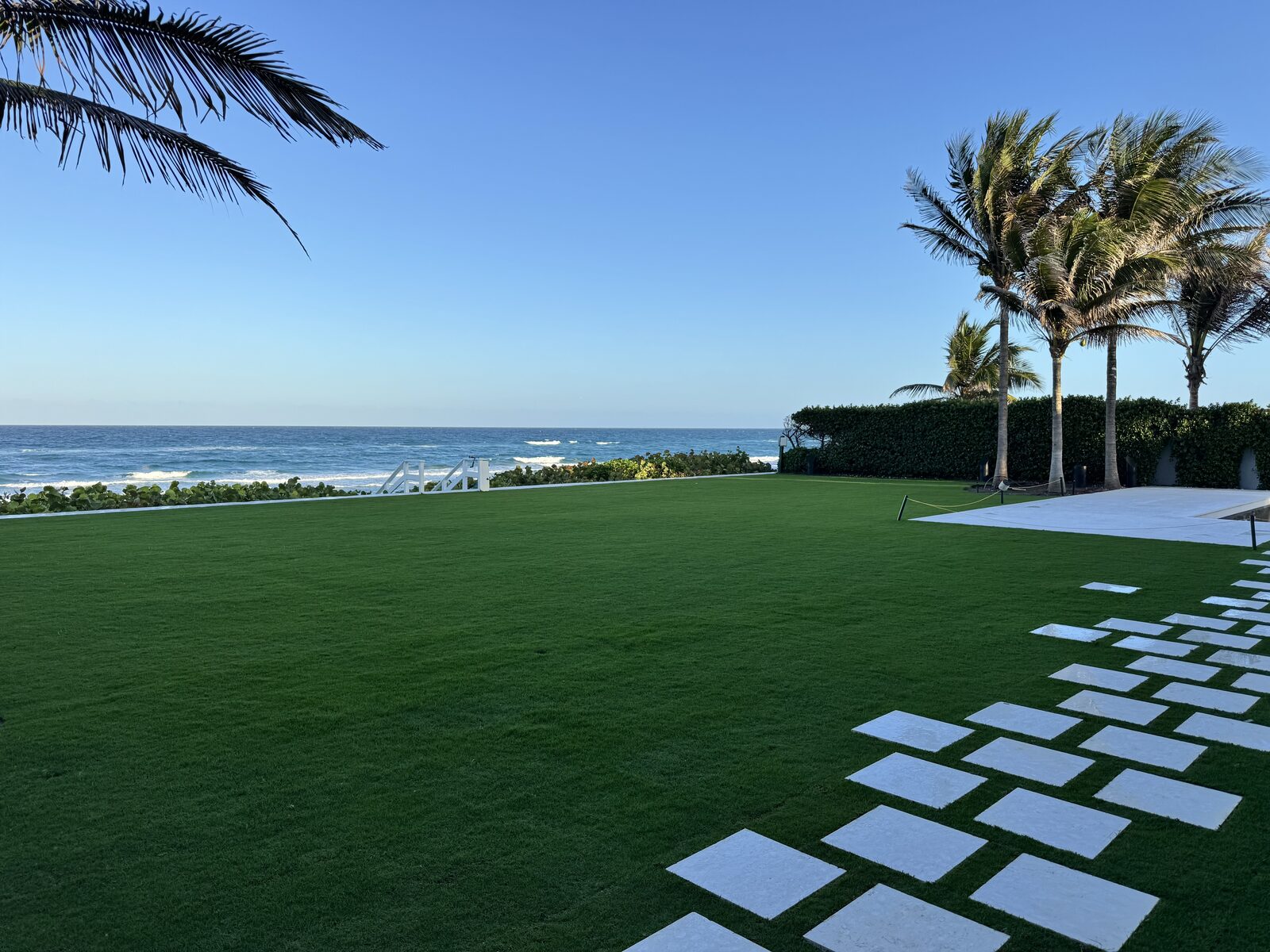
Have you ever noticed how the grass at Augusta National looks like carpet? Not metaphorically — like actual, pristine carpet that golf pros could roll a ball across blindfolded.
What if I told you the secret isn't the grass itself. It's what happens before the grass goes down.
Every spring, right around Masters Week, Augusta's greenskeeping team spends weeks preparing those fairways. They grade. They amend soil. They address drainage. They obsess over pH and compaction. Then — only then — they lay the turf. And it thrives because the foundation was already perfect.
Most sod installations in South Florida don't work that way. A company shows up Tuesday, tears out the old lawn, spreads new sod, collects the check, and leaves. Six weeks later, the grass is thin. Two months later, it's brown and spotty. The homeowner thinks they got a bad batch of sod. What they really got was rushed prep work.
Here's the thing most sod companies won't tell you: the difference between a sod job that's thriving after a year and one that dies in 60 days almost always comes down to what happened before the first piece was ever laid.
We've just found that doing it the right way works best. And that's what we're going to walk you through today — not as a pitch, but as a reality check for anyone actually thinking about new sod in Boca Raton, Delray Beach, or anywhere else in South Florida.
Why Prep Work Isn't Optional — It's Everything
Your soil in South Florida is actually working against you. It's sandy. It drains fast — too fast. It doesn't hold nutrients well. It can be compacted from years of traffic or construction.
Throw new sod on top of that without fixing it? The grass struggles immediately. Roots can't get the moisture they need between waterings. Nutrients wash away. The plant burns out faster than you'd expect.
But take the time to grade properly, amend the soil, fix compaction, and verify drainage? That new sod has a fighting chance. The yard you see below took several days of grading alone — bringing in different soils, pulling out rocky limestone and other materials left over from a pool resurfacing and exterior work that can affect the longevity of the grass, raising elevations and grades where we needed to. It's not a quick process. But when it's done right, the sod establishes. It fills in. And by next season, it actually looks like your lawn instead of a patchwork.
What most people don't realize is that you're not just planting grass. You're planting a relationship between the grass and its environment. If the environment is broken, the grass fails. Period.
What Actually Happens During Proper Prep Work
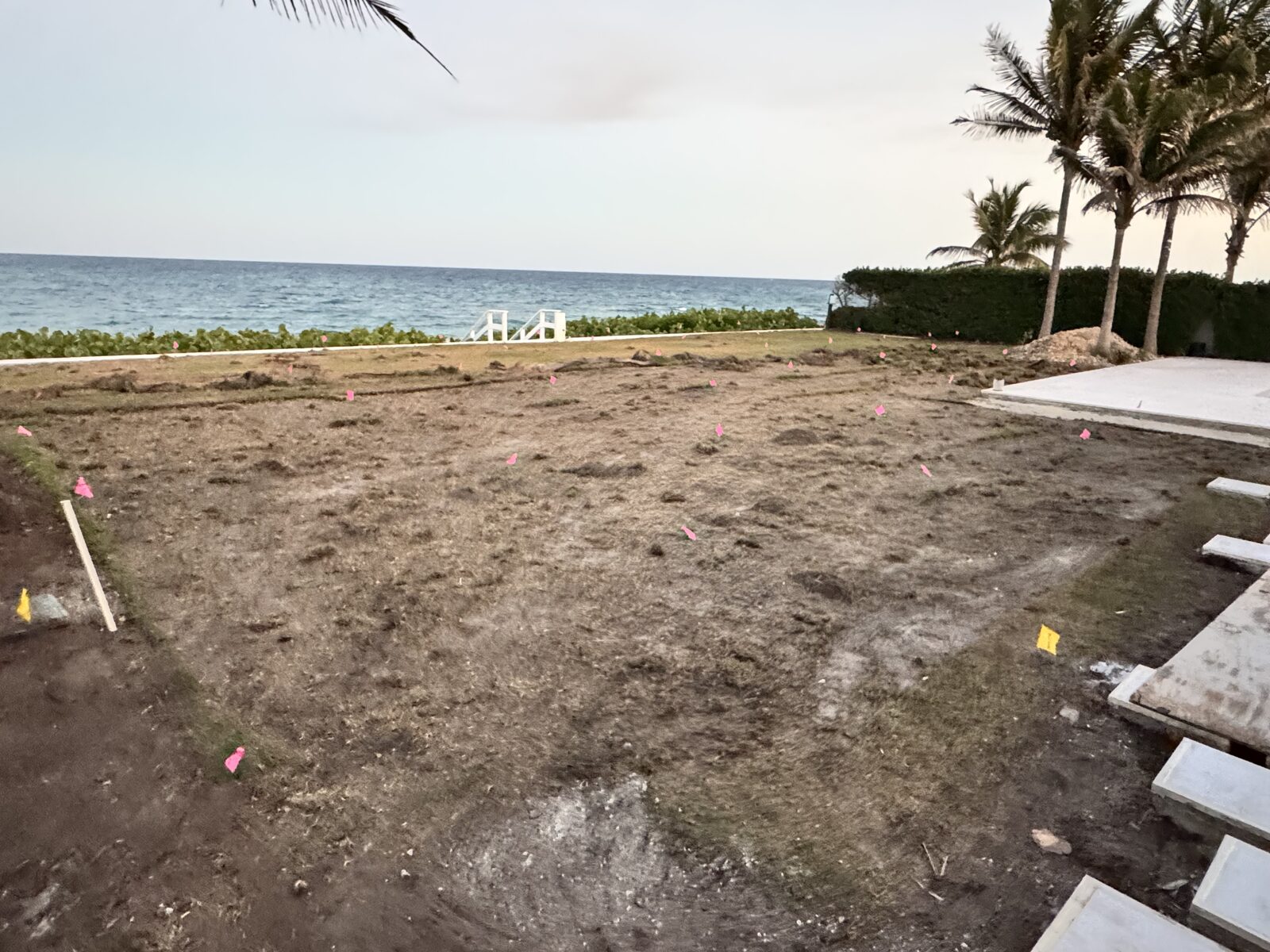
Step one — old sod comes out, the yard gets flagged, and the real work begins.
Grading & Drainage Assessment
Before anything gets torn out, we're looking at your property's slope. Water needs somewhere to go. If your yard drains toward your house, you have a problem before you even start. If it collects in valleys, your sod will be sitting in a puddle half the year.
We identify the natural flow. We figure out if we need to regrade certain areas. This matters because South Florida sits near the water table already. Bad drainage turns into dead grass and potential foundation issues.
Soil Testing & Amendment
We have the ability to get your soil tested through an agronomist we work with — not just eyeballing it, but actual lab testing. The full range of standard markers: soil structure, soil profile, nutrient levels, organic content. A real scientific breakdown of what you're working with.
It doesn't always have to go that far. We can make adjustments based on what we see on-site, pulling our own core samples and working from experience. But when you want to get really dialed in — especially on higher-end installs or problem yards — a lab-tested soil profile is the best way to know exactly what your turf needs. Most South Florida soil either needs a higher sand content or more organic matter worked in, depending on whether it's new construction, what type of turf you're going with, and what's already in the ground.
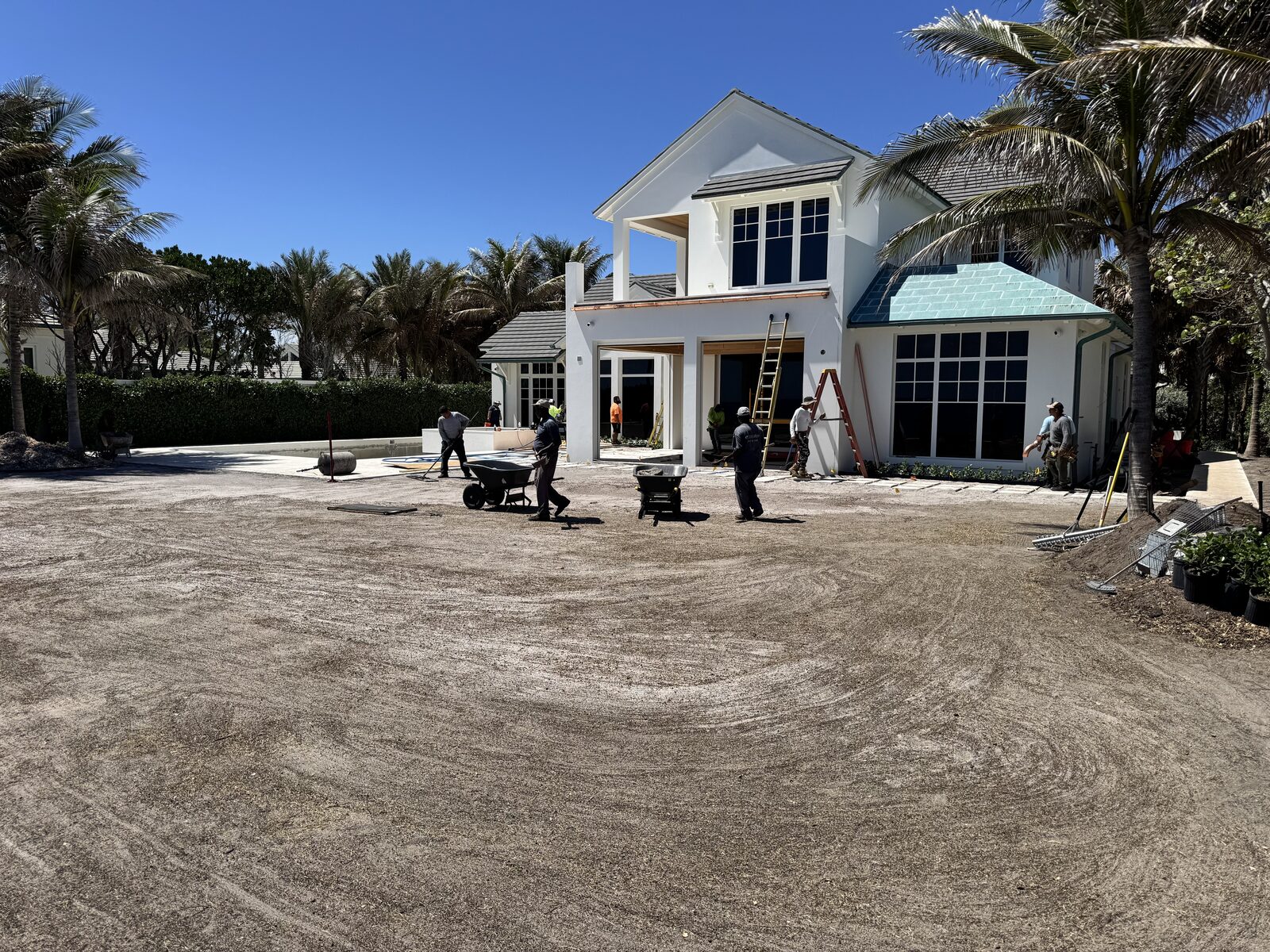
The crew grading and amending soil — this is the prep work that makes or breaks a sod install.
Debris Removal & Regrading
Old sod comes out. So does old thatch, dead roots, rocks, and trash. Then the ground gets regraded to your plan — creating proper slope, fixing low spots, compacting the base just enough that the sod sits firm but not so much that nothing can grow.
This takes time. It's not glamorous. But it's the difference between sod that knits into the ground and sod that stays loose and stressed.
Pre-Installation Watering (Sometimes)
Depending on soil conditions, we might water the prep work a day or two before installation. This settles amended soil and helps the base hold moisture when the sod goes down. It also prevents the ground from drying out mid-install, which would interrupt root contact.
Choosing the Right Grass Type for South Florida
Here's the honest part: not all sod is the same, and not all grass thrives equally in South Florida.
Zoysia: Grows slower, denser, more wear-tolerant. It loves heat and handles full sun, but also does better in shade than Bermuda. Decent drought tolerance once established. Takes 3-4 weeks to fully root in, but when it does, it's a tank. Good choice for high-traffic areas or if you want less frequent mowing.
Bermuda: Fast growing, aggressive, fills in quickly. Very heat-loving and salt-tolerant. If you want your lawn back to normal fastest, Bermuda gets you there. It does need regular maintenance and prefers full sun. More water-hungry than Zoysia during the first month.
Paspalum: The absolute king when it comes to heavy salt wind and overspray on the beach, near brackish water, or properties with higher sodium levels in the water supply. Often used on oceanfront and coastal properties where other grasses struggle. Slower to establish than Bermuda, but more resilient in those tough salt environments.
St. Augustine: The classic warm-season grass. Shade-tolerant, coarse texture, establishes decently. It's less aggressive than Bermuda but more forgiving than Zoysia. Good middle ground if your property has mixed sun and shade.
Which one is right for you? It depends on your sun exposure, soil condition (after testing), and how much maintenance you're willing to do. We typically recommend based on what we find during prep assessment.
What Installation Day Actually Looks Like
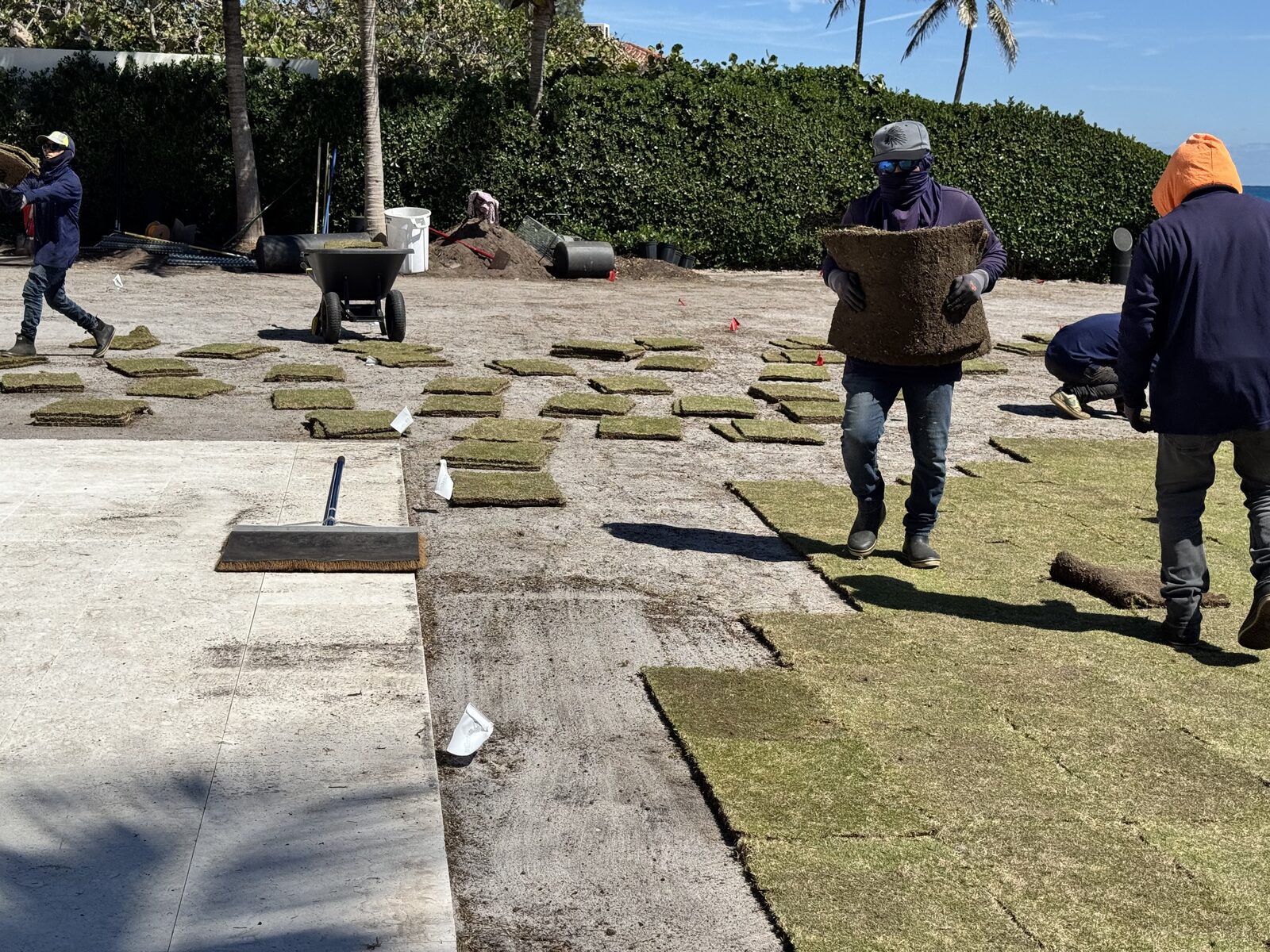
Installation day — even though the prep is done,
laying sod the right way still takes time and attention.
Even though a lot of the heavy lifting happened during prep, installation still matters and takes time to do right.
The sod arrives fresh (you want it the same day or next morning, not stored for days). Every piece has to be laid down carefully, edges buttoned together tight, seams staggered like brickwork to create a seamless pattern through the entire lawn. No weak lines where grass can separate. We firm it down — roll it or press it so roots have full contact with the soil beneath.
Then we water immediately. The sod needs moisture to start the rooting process. This happens the same day.
It's detail work. Getting that seamless look across the whole property is what separates a professional install from a rushed one.
The First 14 to 30 Days: Where Most Lawns Fail
Here's what separates people who end up with good lawns from people who call us back angry in 8 weeks:
The Critical Window
Your sod is stressed. It's been cut, shipped, laid. The roots need to establish contact with the soil. Water every day during this phase — we're talking 20 to 60 minutes per zone, per day, sometimes multiple times a day. Microdosing water to help battle hot spells and heat waves and keep the grass alive during the establishment phase. You want the top inch of soil and the sod consistently moist, but not waterlogged.
Stay off the lawn. Completely. Walking on fresh sod disrupts root contact. I know it's hard not to walk in your own yard, but this matters.
Days 4-7: Establishing Roots
Continue daily watering but reduce slightly — maybe 45 minutes to 1 hour if it's not blazing hot. You're looking for the sod to have slight give when you tug on a corner. That means roots are starting to grab.
Zoysia, Bermuda, and Paspalum can sometimes drive roots within ten days. When conditions are right and the prep work was done properly, these grasses establish fast.
Still stay off it. The sod is still fragile.
Days 8-14: Transition Phase
By now, your sod should be rooting in. We pull back watering to every other day, maybe every 2 days if there's no rain. You want the soil to dry slightly between waterings — this encourages deeper rooting rather than shallow surface roots.
Light activity is okay now. Kids can play. But don't put heavy stress on it.
Days 15+: New Lawn
When you mow depends on the grass type. For St. Augustine, you want it around three and three-quarters to four inches before you cut — keep it higher. For the shorter turf grasses like Bermuda and Zoysia, you'll want to start lightly cutting as soon as the sod has tacked down, before it gets too thick. You don't want to take too much off at one time. Use a sharp blade. Never remove more than one-third of the blade height in a single cut.
After the first mow, you can shift to normal watering — maybe 3 times a week for the first month, then dial back as the grass deepens its root system.
What kills most new sod? Not watering enough in the first 2 weeks, or watering too much and creating fungal issues. Or not staying off it while it's vulnerable. Or mowing it too short when it's ready for the first cut.
Most people don't realize that the work isn't done when the sod is laid. It's just beginning. The first few weeks determine if your investment becomes a beautiful lawn or an expensive mistake.
Why the Cheaper Bid Isn't Always the Better Deal
A lot of the cheaper sod jobs out there are cheaper for a reason. They're not factoring in real prep work. They're not grading. They're not amending soil. They're not taking the time to seamlessly install each piece — they're dropping it and going.
The price to do the job well is the price to do the job well. That includes the grading, the soil work, the testing if it's needed, and the attention during install. When someone comes in significantly lower, it's worth asking what's being skipped.
What we see with rushed installs: you're calling someone back at month two because the grass is dying. You're replanting sections. You're paying again to fix what should have been done right the first time. Or you live with a mediocre lawn for a couple years until you finally decide to start over.
A properly prepped install? It establishes. By month three, it looks mature. By month six, you can't tell it's new. And you're not hiring anyone back.
A Humble Take on Hiring for This Work
We do this work. So obviously we think you should hire someone like us. But that's not the point of this post.
The point is: if you're actually getting new sod installed, here's what to look for in whoever you hire:
- They're asking about your soil and doing some kind of assessment, not just quoting based on square footage
- They're talking about prep work and grading, not skipping straight to "we'll lay sod Tuesday"
- They're explaining what you need to do the first two weeks and why, not assuming you'll figure it out
- They have references from people who installed sod with them 2+ years ago (not fresh installs that look good anyway)
If someone's trying to get you in and out in a day without talking about soil conditions, grading, or follow-up care, they're optimizing for speed and their schedule, not for your lawn, your satisfaction, or the finished product.
Augusta National didn't become Augusta National by cutting corners. They obsess over prep work, follow-up care, and long-term thinking. Your lawn doesn't need to be a golf course, but it deserves the same logic.
If you're in South Florida and you're thinking about sod — whether you're in Boca Raton, Delray Beach, Gulf Stream, Deerfield Beach, Lighthouse Point, or Pompano Beach — that's the real conversation worth having. Not price, but what happens before, during, and after to make sure it actually works.
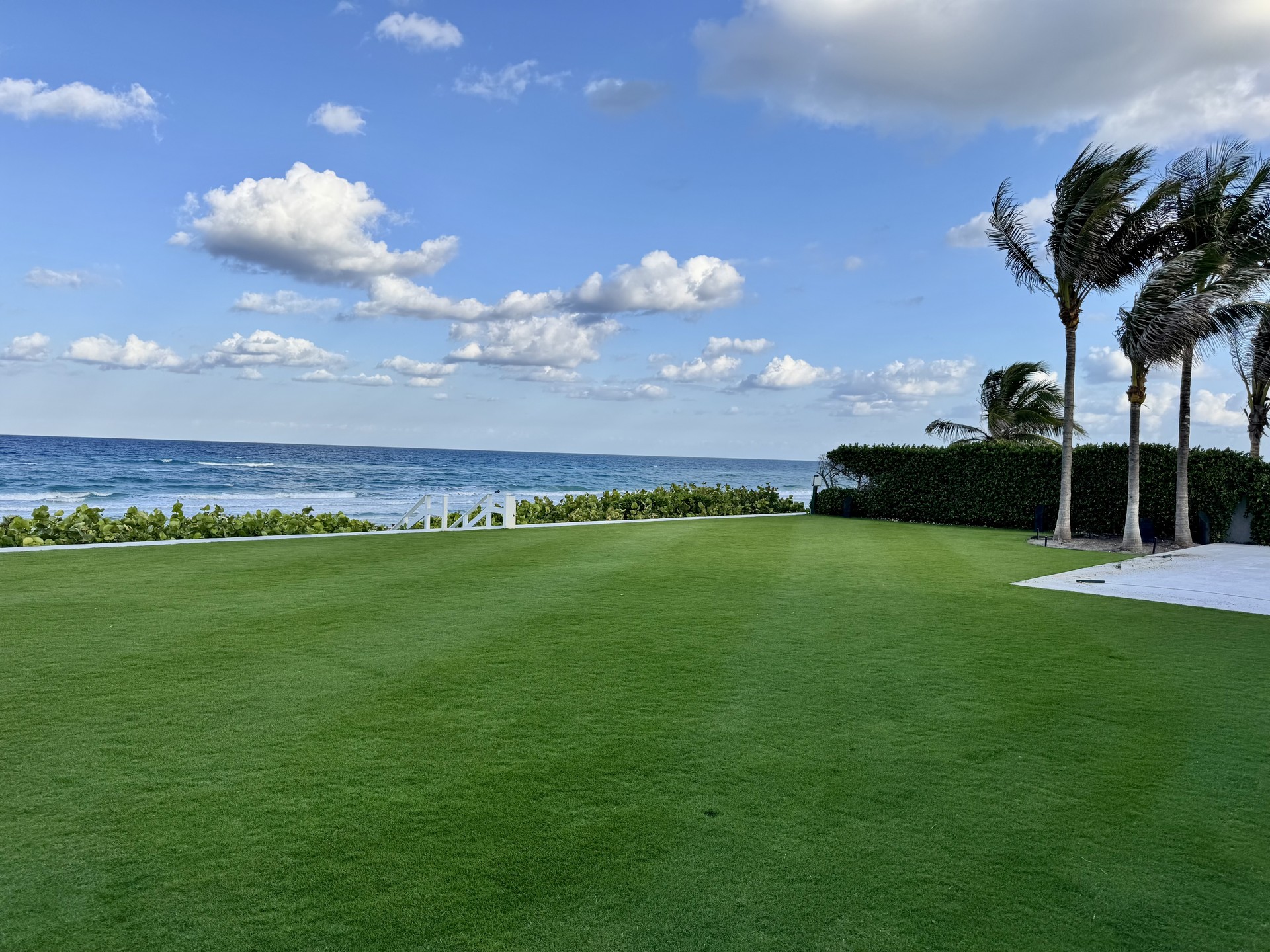
First double cut with a fresh, sharp reel mower
at day 15 after Paspalum sod installation.
Proper prep, proper install, proper follow-up.
That's the difference.